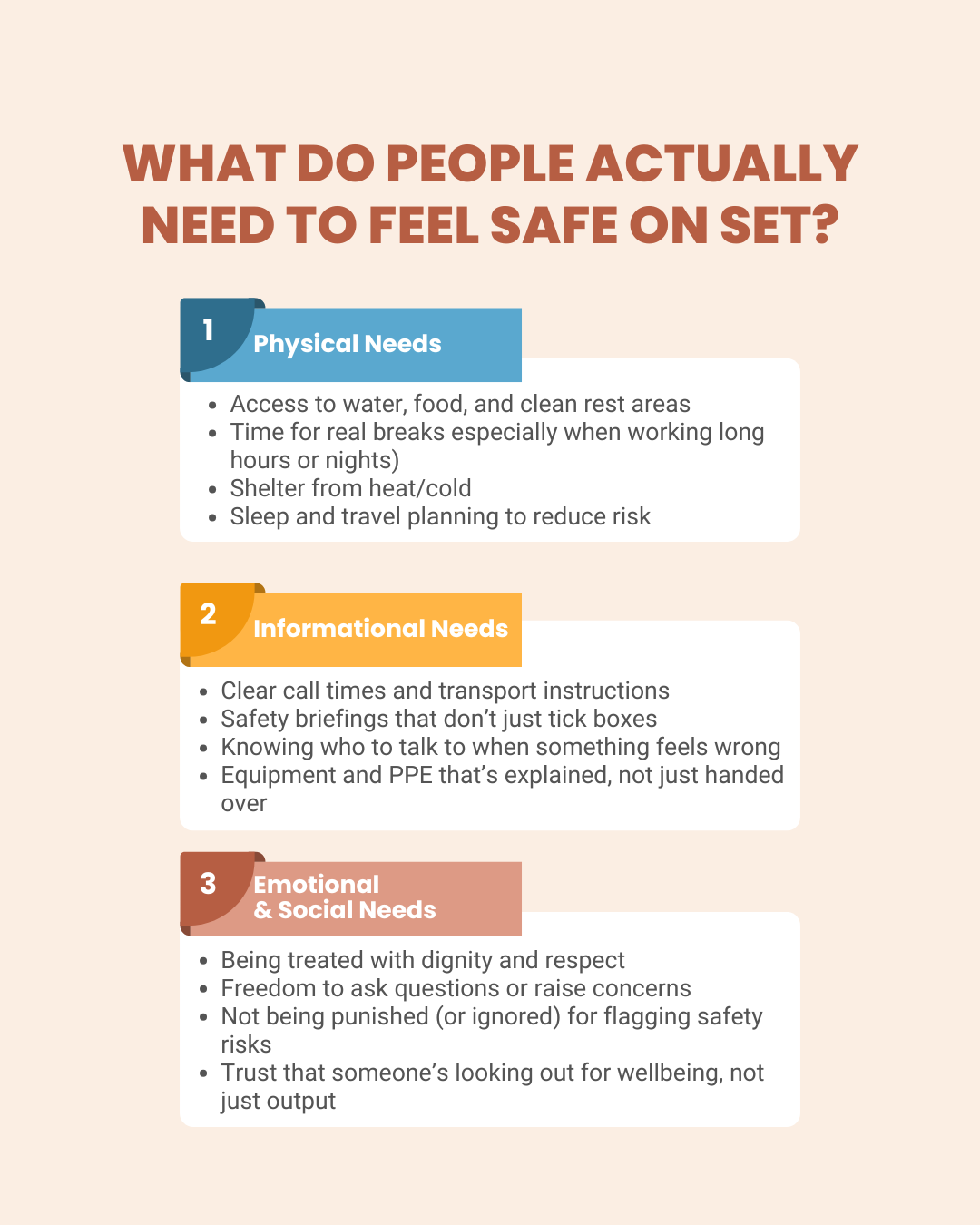
Film and TV production is thrilling work. But behind every unforgettable scene is a complex operation that has to put safety first. Accidents on set continue to happen, and there is no doubt that health and safety in the creative industries can improve.
Most safety conversations start with rules: PPE, protocols and checklists. Those matter. But our production data shows that real safety depends on more than compliance. It starts earlier than most productions think, and it relies on people feeling able to speak up.
Safety starts before set
Through analysing hundreds of productions, we spotted a clear pattern: 89% of crew who felt unsafe on set also felt unsafe commuting to it.
Feeling unsafe does not only happen during stunts or fight scenes. It can start on the drive in, and it creates a lasting first impression. When travel is arranged late, call times are unclear or rest is not built into the plan, cast and crew arrive exhausted, anxious and already on edge.
Safety is not only about where people get hurt. It is about where they feel unprotected. And in our data, that shows up long before anyone says "action".
Safety is not the same as compliance
Most productions open with a safety briefing. Fewer revisit safety once the rain sets in, call times drift and crews are driving four hours home through floods.
Across productions, we have seen people fail to flag risks even when they knew something was wrong. It tends to happen when:
- Risk management is handled as a formality.
- Schedules are adjusted for budget, not conditions.
- Changes to hours happen without rechecking fatigue.
- Safety becomes something people "agree to" rather than actively shape.
In those conditions, safety compliance might be ticked off while psychological safety is not.
The chain reaction: how safety affects the whole production
Safety is not just about preventing accidents. It is the foundation of a smooth production. When crews feel safe, the effects flow through everything: trust builds, communication improves, teams work better together and people are more likely to come back for the next job. When safety slips, the same chain runs in reverse.
Six practical ways to improve health and safety on set
1. Carry out thorough risk assessments
Conduct a comprehensive risk assessment for every location. It is a vital step that should never be skipped, and it should include how people will travel to and from set.
2. Write clear protocols, including for emergencies
Protocols should cover daily operations, but many lack a clear emergency response plan with a contact list. In an emergency, a readily available contact list makes it much faster to mobilise the right support.
3. Invest in a safety officer
Health and safety officers are often seen as a cost on a tight budget. But having someone whose job is to make sure protocols are followed, and to address issues promptly, is a crucial investment.
4. Plan travel and rest into the schedule
Confirm travel and call times early, and build rest into the plan. People who arrive rested and informed are safer from the first minute.
5. Adjust to conditions, not just the budget
Revisit expectations when weather, hours or conditions change. A briefing on day one cannot anticipate everything that happens on day twenty.
6. Balance briefing with listening
Make space for concerns to be raised early, and anonymously. The people closest to a risk are usually the first to notice it, but only if they feel safe saying so. We look at why crews stay quiet in Why crews stay silent.
Get a picture from within
The best way to improve safety is to hear from the people who have to work within it: the cast and crew on set. Prevention works best when it is cultural, not just procedural.
Talent Trust helps productions do exactly that, with short, anonymous check-ins that show how safe people feel across the whole working day, including the journey in. See how it works, or read our 6 ways to prevent on set injuries.
This post is advice only. Always seek professional advice for your specific situation.